The Rise of the Fractional LP Secondary Market
February 17, 2026
Introducing the LPShares Secondary Discount Index (LSDI–RE)
Private markets have grown dramatically over the past decade. Global private capital assets under management now exceed $13 trillion according to Preqin. Yet while institutional secondary markets are well documented, fractional limited partnership interests in private real estate remain largely under-measured.
A quiet liquidity gap exists.
At LPShares, we observe structured secondary activity across asset-level LP interests under $5 million. What we consistently see is a meaningful divergence between stated book capital and market-clearing liquidity pricing.
To measure that gap, we are introducing a new benchmark:
The LPShares Secondary Discount Index (LSDI–RE)
The LPShares Secondary Discount Index – Real Estate (LSDI–RE) measures the percentage difference between:
• Stated Book Capital Account Value
• Observed Secondary Transaction Price
For fractional commercial real estate LP interests under $5 million.
Formula
LSDI–RE =
(Book Capital – Secondary Price) ÷ Book Capital
Expressed as a percentage.
The index isolates liquidity friction. It does not measure asset-level valuation changes or fund-level NAV adjustments. It measures the liquidity discount in asset-level LP transfers.

A Defining 2025 Case Study
In 2025, a 10-year big box anchored retail LP interest in the Dallas–Fort Worth metro transferred in a structured secondary recapitalization.
Transaction Highlights:
Original Investment: $4.35M
Total Cash Distributed: $3.82M
Book Capital at Sale: $4.65M
Secondary Purchase Price: $2.825M
Implied LSDI–RE:
39%
The LP had recovered approximately 88% of original invested capital prior to pursuing liquidity.
The liquidity decision was triggered by a refinancing that extended the asset’s expected hold period by another decade. The seller cited estate planning and capital simplification objectives.
The incoming buyer acquired:
• A stabilized, income-producing position
• Approximately 15% trailing cash-on-cash yield
• Entry at a 39% discount to book capital
This was not a distress sale. It was a lifecycle transition.
Why Do Fractional LP Interests Trade at a Discount?
Unlike institutional secondaries tracked by PitchBook or Preqin, fractional LP interests under $5M face structural friction:
• Sponsor consent requirements
• Limited bid discovery
• Transfer documentation complexity
• Illiquidity premium
• Smaller buyer pool
As a result, liquidity-clearing prices often diverge materially from stated book capital.
The LSDI–RE quantifies that divergence.
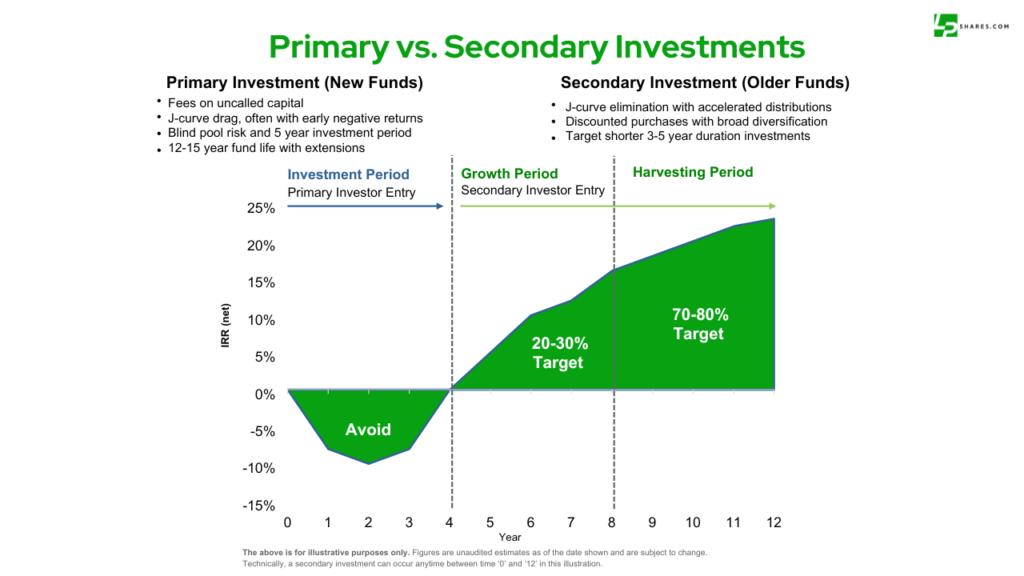
The Role of Refinancing in Secondary Liquidity
Refinancing events increasingly act as liquidity catalysts.
When a sponsor refinances rather than sells, hold periods can reset by 5–10 years. That creates a mismatch:
• Sponsors may optimize for long-term performance
• LPs may prefer capital redeployment or estate simplification
Secondary marketplaces bridge that time-horizon gap.
Demographic Strength Matters
The Dallas–Fort Worth metro has ranked among the fastest-growing metropolitan areas in the United States, according to the U.S. Census Bureau.
Population growth and corporate relocation trends support long-term retail fundamentals.
Secondary buyers often incorporate demographic durability into underwriting decisions, particularly when acquiring recapitalized positions following refinancing events.
2025–2028 LSDI–RE Outlook
While 2025 observed an LSDI–RE of approximately 39% in the featured transaction, we expect gradual normalization as the fractional LP secondary market matures.
Projected directional ranges:
2026: 30%–40%
2027: 25%–35%
2028: 20%–30%
These ranges reflect anticipated:
• Increased sponsor familiarity with structured transfers
• Expanded secondary buyer participation
• Improved price discovery
• Broader liquidity infrastructure
The illiquidity premium is unlikely to disappear. But over time, improved transparency may compress extreme discount dispersion.
The Emergence of Lifecycle Liquidity Infrastructure
Private real estate syndications frequently extend beyond original underwriting timelines.
As private allocations age, LPs increasingly face:
• Generational estate transitions
• Long-duration holds
• Ongoing tax reporting complexity
• Capital redeployment decisions
Secondary liquidity is evolving into planned lifecycle infrastructure rather than opportunistic exit.
The maturation of private markets requires parallel maturation of liquidity mechanisms.
Why This Matters
The fractional LP secondary market remains underreported relative to fund-level secondaries.
The LPShares Secondary Discount Index (LSDI–RE) represents an effort to bring structure and measurement to a growing segment of private market liquidity.
As private capital continues expanding, transparency around asset-level LP pricing will become increasingly important for:
• Sponsors
• Family offices
• RIAs
• Accredited investors
• Estate planners
The liquidity gap between book capital and market-clearing price is not an anomaly. It’s a structural feature of fractional LP markets.
And it’s measurable.
About LPShares
LPShares is a secondary marketplace where accredited investors and sponsors connect to buy and sell limited partnership interests in private real estate and alternative assets.
The platform facilitates structured exposure and sponsor-approved transfers while enabling liquidity for LPs seeking capital redeployment.
Call to Action
If you are:
• A limited partner seeking liquidity
• A sponsor navigating LP transitions
• An investor looking for discounted secondary exposure
Explore current opportunities or request more information at LPShares.com.
Frequently Asked Questions
LP Secondary Market & LSDI–RE
What is the LPShares Secondary Discount Index (LSDI–RE)?
The LPShares Secondary Discount Index – Real Estate (LSDI–RE) measures the percentage difference between a limited partner’s stated book capital account and the observed secondary transaction price for commercial real estate LP interests under $5 million.
Formula:
(Book Capital – Secondary Price) ÷ Book Capital
This formula quantifies the liquidity discount in fractional LP secondary transactions.
Why do private real estate LP interests trade at a discount to book value?
Fractional LP interests often trade at a discount due to:
• Illiquidity premium
• Sponsor consent requirements
• Limited buyer pool
• Transfer documentation complexity
• Market rate environment
The discount reflects liquidity friction rather than necessarily asset underperformance.
What triggers LP secondary liquidity events?
Common catalysts include:
• Refinancing that extends hold periods
• Estate planning and generational transition
• Portfolio rebalancing
• Capital redeployment objectives
• Changes in personal liquidity needs
In many cases, liquidity is lifecycle-driven rather than distress-driven.
Is the LP secondary market the same as institutional secondaries?
No.
Institutional secondary markets tracked by Preqin and PitchBook focus primarily on fund-level transactions and GP-led continuation vehicles.
The fractional LP secondary market involves asset-level interests, typically under $5 million, and remains underreported relative to institutional markets.
Who typically buys fractional LP secondary interests?
Secondary buyers often include:
• Family offices
• Registered Investment Advisors (RIAs)
• Accredited individual investors
• Existing sponsor-aligned investors
Buyers typically prioritize current income, demographic strength, and entry discount over mark-to-book alignment.
How does LPShares facilitate LP secondary transactions?
LPShares.com provides a structured marketplace where limited partners can seek liquidity and accredited investors can pursue discounted secondary interests. Sponsors retain full control over investor approvals and transfer consent.
Download the 2026 LP Secondary Market Report
LPshares is a secondary marketplace for limited partner interests in private real estate and alternative assets.