Why Private Market Hold Periods Keep Getting Longer
March 10, 2026
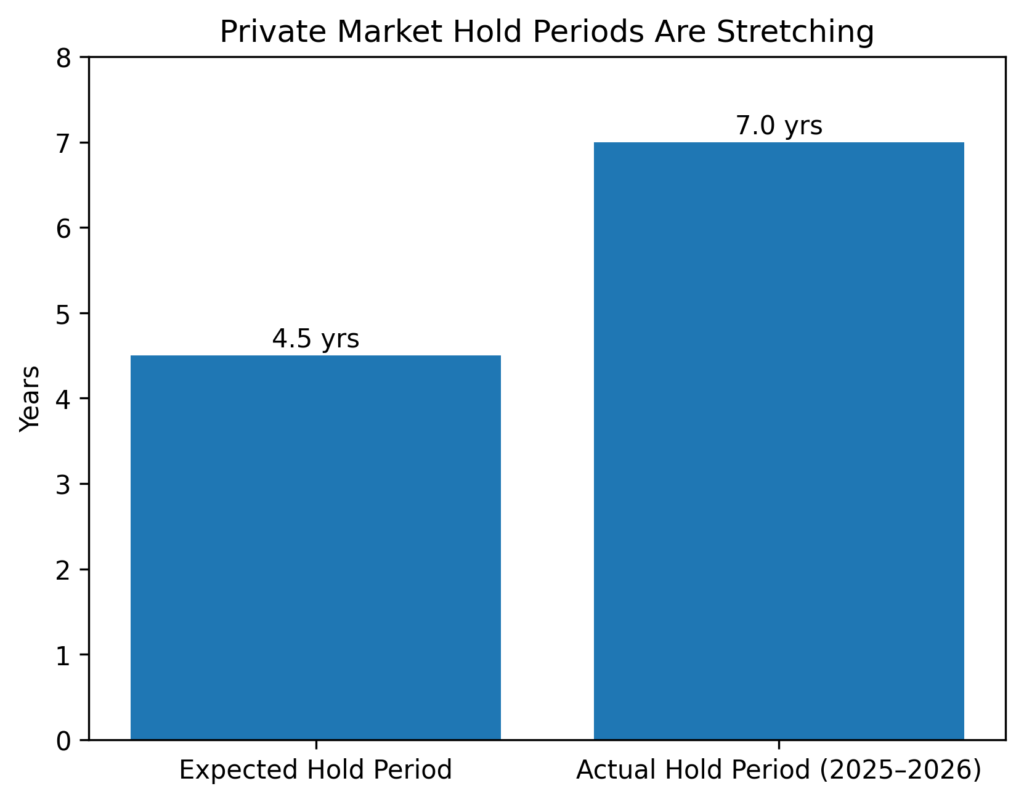
Over the past several years something quiet has been unfolding across private markets. Assets are staying inside portfolios longer than many investors originally expected.
Private equity and private real estate funds historically built their strategies around a defined timeline. A typical hold period often landed somewhere around four to five years. That structure allowed sponsors to improve operations, grow income, then exit through a sale or public offering.
That rhythm worked for decades because exit markets were active. Strategic buyers were aggressive. Public markets welcomed new listings. Capital recycled quickly and investors could redeploy into the next opportunity.
The environment today feels very different.
Higher borrowing costs have changed acquisition math for buyers. Financing structures require more discipline. Public listings appear less frequently and many sponsors prefer to wait for stronger conditions before bringing assets to market.
The result is simple. Many assets that once might have traded hands after five years remain inside portfolios well beyond that timeline.
For limited partners this creates a new layer of portfolio management. Capital that was expected to return within a certain window continues working inside the fund structure. Allocation plans stretch. Liquidity planning becomes more complicated.
None of this means the assets themselves are struggling. Many continue producing stable income and growing operationally. The tension appears around timing rather than performance.
Institutional investors understand this dynamic well. Large portfolios often carry dozens of private positions across different funds and vintages. When exit timelines extend, investors sometimes look for flexibility that traditional fund structures were never designed to provide.
That is where the secondary market becomes increasingly relevant.
Secondary transactions allow limited partners to transfer existing fund interests to new buyers. The underlying asset stays inside the fund. Ownership simply moves from one investor to another. The sponsor continues managing the investment while liquidity becomes possible for the seller.
What once existed as a niche corner of private markets now plays a growing role in portfolio management. Institutions use secondaries to rebalance exposure. Family offices use them to access positions that were previously unavailable. Long term investors use them to enter funds that already hold operating assets.
As private markets continue to mature, tools that support liquidity naturally become more important. Investors still value long term strategies and durable assets. At the same time they benefit from having options when circumstances change.
Extended hold periods do not weaken private markets. In many cases they simply reflect a cycle where sponsors prefer patience over rushed exits. What evolves alongside that patience is an ecosystem that allows capital to move when investors need flexibility.
LPshares is a secondary marketplace for limited partner interests in private real estate and alternative assets.